Opportunities shrinking for too many young people, says major report on ‘lost generation’
https://www.bbc.com/news/articles/cy026x9jpd0o
When you click on the link above, you’ll find yourself reading about the situation for Secondary Education graduates and even those already with college behind them, trying to find jobs in the UK. Similar conditions exist in America, and the same challenges face our young adults- the problem is that millions of jobs are available in American companies of all sizes and they can’t get trained & able young people to fill them, despite all kinds of built-in incentives.
Now watch the video to the right and listen to Jim Farley, CEO of Ford Motor Company, one of the largest vehicle manufacturers in the world. He recently stood on the factory floor, in front of the cameras, and said one of his line workers told him that young people didn’t want to come work at his company for $17 an hour. What it doesn’t mention is that these kinds of jobs come with good benefits, like insurance, health care, education assistance, retirement packages, and much more. There are virtually countless other companies across the country and around the world who need good, trained, healthy young people to keep their companies staffed well and productive. For young adults seeking employment, jobs like these can be hard to find…especially if they don’t have even the most basic skills, don’t really know what to look for, don’t have a Life Plan of any kind, and don’t even try to apply.
Our company is designed to help address this opportunity by giving Secondary School students access to the skill sets they must have to boldly enter this job market, this economic arena, with some ideas of what they want to do, knowing how their learned skills & abilities can give them an edge over other candidates. To truly and successfully compete in a field of millions, psychologically prepared and already exhibiting a responsible approach to employment, with experience, and the willingness to learn even more and work for something.
We can’t teach Work Ethics, but we can teach ethical work behaviors.
CHECK OUT THE diverse CAREER TRACKS designed to ENGAGE AND READY students IN OUR SCHOOLS with essential VOCATIONAL AND OCCUPATIONAL life skills.
Train
Inspire
Educate
G.U.S.T.O. is dedicated to equipping young people with vital life skills through comprehensive training programs. Our resources aim to foster confidence and self-esteem in Secondary Education, where it’s needed most, ensuring that every student graduates with the knowledge and tools necessary for lifelong pursuits, whether they’re in various vocational and occupational paths, or in personal endeavors, with home-making, art, crafts, hobbies, projects, inventions, small businesses, almost infinite choices.
Mapping Futures
Skills for a Purpose
Think of Skills Training as a tree- the roots are in Grades 6-8, you break ground to the branches in Grades 9-12. G.U.S.T.O. is dedicated to equipping young people with essential hands-on skills through comprehensive, focused, and totally relevant training in their schools and communities. Our Mission is to foster confidence and self-esteem, ensuring that every student graduates with tool “kits” they’ll need, not only to survive, but to thrive in this changing World.
HOW IT WORKS
Think about it. Every school is different, every community, every region, the diversity boggles the mind. So it’s no surprise that every Program in each school has to be, basically, a custom-made Project designed with those students in those schools as the focus in every decision. Therefore, the parents and guardians need to be involved from the outset. When a school hears about the program, and matches the eligibility requirements, a meeting between a G.U.S.T.O. representative, the school’s Building Administrators (or designees), and Teachers can take place to see if this is a fit for their setting. It may, for example, include a walkaround on the campus to identify anything that can assist the school if they have availability or infrastructure issues. A decision can then be made how to proceed with the next step.
Let’s create a fictional school, be it a rough Middle or High School, called Rusty “Belt” Wiggins Secondary School on the outskirts of Chicago, or Bad Bunny Melo in San Juan, or say, PS123 in New York City. The process is the same for all, though the student bodies and the settings are entirely different. The parents & guardians are notified that the school is considering the program, and an introductory presentation will be conducted at the school to immediately involve the school’s PTSA and other parent groups for their involvement. Their input is already embedded in that process. The requirements are laid out, as this is “codified” when Students and Parents sign the contract that binds all parties to a student’s participation, and the commitment that goes with it. It’s not for everybody, and some may demure. That’s okay.
Now the school Administration and Families pick & choose the ultimate career choices they want to see their students pursue, in the communities in which they live, work, and recreate, in the region where opportunities to work and settle may exist. For Rusty “Belt” Wiggins Secondary School, they’re probably less interested in the Agriculture, Horticulture & Landscaping, or Entertainment, etc. programs, and more in Medical & Dental, Construction Techniques, Maintenance & Repair, Health & Beauty, and Handyman curricula. With those in mind, G.U.S.T.O.’s Curriculum Guides take students from the preparatory skills training in Middle School through more specialized training in High School modules to finish Senior Year poised to go to work in the paths they helped choose. How do we accomplish this? The Learning Modules are collections of skill sets, made up of Lesson Plans for each of the different skills required for mastery (that magic word) of each. All of these components are supplied in “Packets” for the Instructors who are qualified and willing to teach the skills- The Lesson Plan, complete instructions, Safety gear with reinforcement, the tools & equipment, consumables, parts, raw materials, and a place to make it work, all are provided. These Learning Modules make up the “roots & branches” of the tree that is the structure.
Easy example: The concept of the skilled task of “drilling a hole in something”. Sounds simple. What kind of hole, in what material? What kind of drill and bits are to be used where? What is the desired end result, and what specifications are to be met? Is this work for construction, or drilling teeth, oil wells, or interior decorating panels? As students move through the career path offerings in each class and grade level they’ll encounter lessons that build on the one they began with in Middle School, using different types of rotating equipment to learn the basics, so they’re ready in High School for lessons in drill presses, high speed buffers, dental drills, hammerdrills, core drills, Dremel tools, lathes, and so on. That’s just one example, the possibilities are almost endless. Students will amass a personal collection of tools and resources they’ve used throughout the Program on their way to the graduation stage, and beyond.
Now let’s talk about Intangibles. What else are students learning in this process, things that aren’t necessarily on the Lesson Plan or in the Syllabus? First off, we have their attention, because everything we do keys on Relevance, why this matters to these young people. They’re learning Responsibility, because you don’t fool around in this system. Safety is paramount at all times, and this is a dominant feature of everything we do. They’re learning Organization, recalling “A place for everything, and everything in its place.” when you’re looking for or putting away tools, attachments, bits, brushes, fasteners, tints, shades, explorers, in all the fields in which you’ll work. Planning is important, and students learn that from the beginning- what are you intending to accomplish, how will you get there, and what is it you want to see when you finish? They’ll learn Patience, because all kinds of things can, and will go wrong when you work with your hands and create or fix things, and you roll with it, finding ways to work through the surprises. They’ll learn how to work well and safely with others around them, and to recognize value and satisfaction with the leaders in the process and the other participants. They learn Respect. They develop Confidence in their own abilities, and acquire the Self-Esteem that accompanies job completions of the things they probably thought they’d never experience. And that generates Pride. Even at Rusty “Belt” Wiggins Secondary School, which has begun a not so quiet transformation.
WHAT IS NEEDED
We need Resolve, and an army. A big army, financed and focused on the same Plan and philosophy. Instructors, in-school Coordinators, Lesson Plan writers, Curriculum Guide developers, support and distribution hubs for provision of tools & supplies, HR folks, legal staff, Advisors, Craftsmen, Union Reps, Industrial Arts veterans and guest speakers, over 30 role descriptions are ready, and the 3-year Business Plan provided to the IRS is populated. Community businesses and local sponsors have a stake here and many gladly volunteer for students to come to their locations to shadow and learn what it’s like to enter into all the different types of opportunities out there. Many of these firms will already be looking at who they’re going to be hiring for their future needs. We need Administrators who are willing to embrace something truly different and hugely beneficial to their students, requiring a willingness to be bold and flexible. We need to help each other always remember why we’re doing this. Teaching is a crap game- we have these young people in our hands for up to 6 years, and then we let them go, the majority we’ll never see again. But they’ll always remember what we taught them (or not) AND how we made them feel. Lastly, we need fires in the bellies of all of the staff working with all of the students, and with each other. It’s a Mission, a Ministry, a calling. Good leadership by example, because it works and it’s contagious.
FINALLY, WHO BENEFITS
Well, everybody benefits! The students, most importantly, but so do the families, and therefore the communities in which and where they live. They have capable and solid possible employees who can pass a pee test to get to the interview. The graduates already know Safety and First Aid, CPR, have skills as well as tools, driver’s licenses (CDL’s, why not?) and a full “tool kit” of experience. Companies suddenly have candidates for jobs they’ve been struggling to fill, and local economies are bolstered by young people who need tools, supplies, work clothes, all that, not just for their work, but for their personal projects and pursuits as well. Ideally, this fresh labor force, possibly one of the best in the world, will want cars, and homes, and a future, because those things are within their grasp, not just their dreams. Entrepreneurs, inventors, artists, craftspeople, savants emerge, young adults with Purpose. Yes, the Purpose Driven Life, a concept drowning right now in the waves of lost adult souls wandering the professional landscape wondering what to do with their lives.
LAST POINT
Ultimately, we’re talking about Learned Behaviors here. Throwing rocks at a police car is a learned behavior. So is polishing the bumper of a hot car that was formerly a piece of junk, but was embraced as a Senior project for a class in Automotive Restoration, and completed by the end of the school year by a group of totally engaged young people. Or how to stick near-perfect wall paper (an extremely high-demand skill) in the Interior Decoration curriculum. We teach using the “I do, we do, you do” approach to successful skills instruction, showing by example the correct way to execute skills, doing them with the students, then watching them do it themselves. One of the unspoken goals is to replace negative learned behaviors with positive ones. When a school has a GHS rate of 70%, and 30% of the students “disappear”…where did they go? What survival behaviors are they learning? When young people exhibit positive behaviors they’ve picked up in this Program, we know they have a chance to succeed. They have options. Replace aimless negative conditions and behaviors with focused positive ones. Pretty simple, don’t you think?
THE COST
It’s not a cost in the long run, of course, it’s an investment with stunning results. In the first year, you’ll have Seniors enjoying a “crash course” in which they get the pre-requisites in Safety & First Aid, then the modules for basic tool handling, work area protocols, shopcraft, task/project completion, and finishing. Off they go to work, already ahead of the game. That’s a ROI of one year for that group!
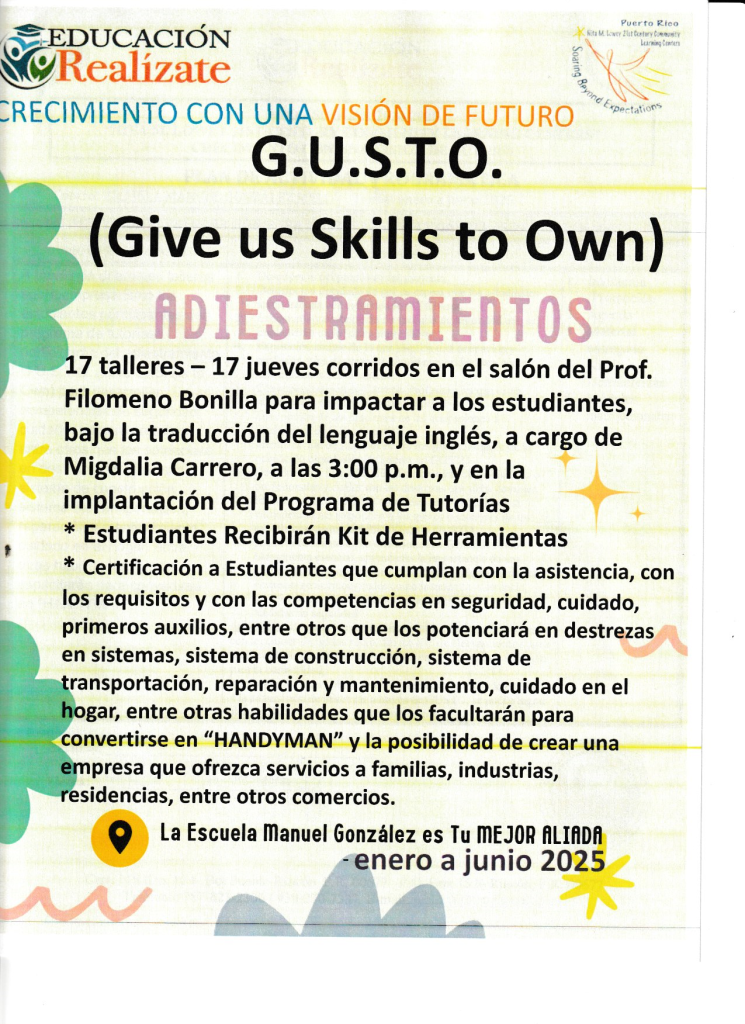
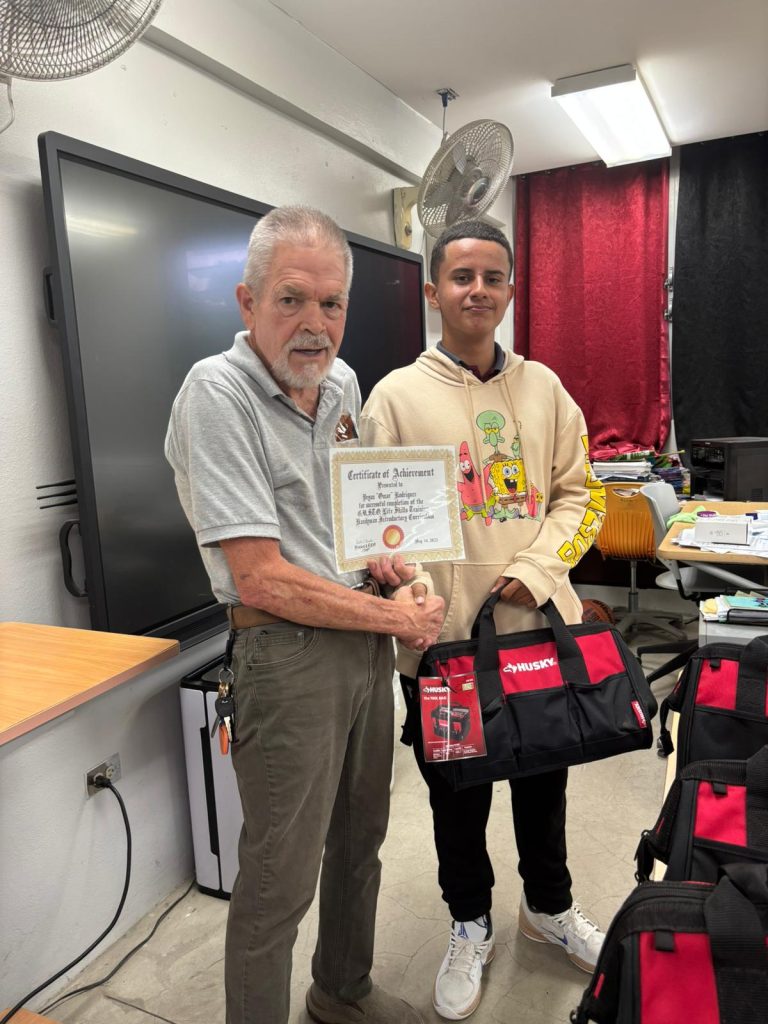
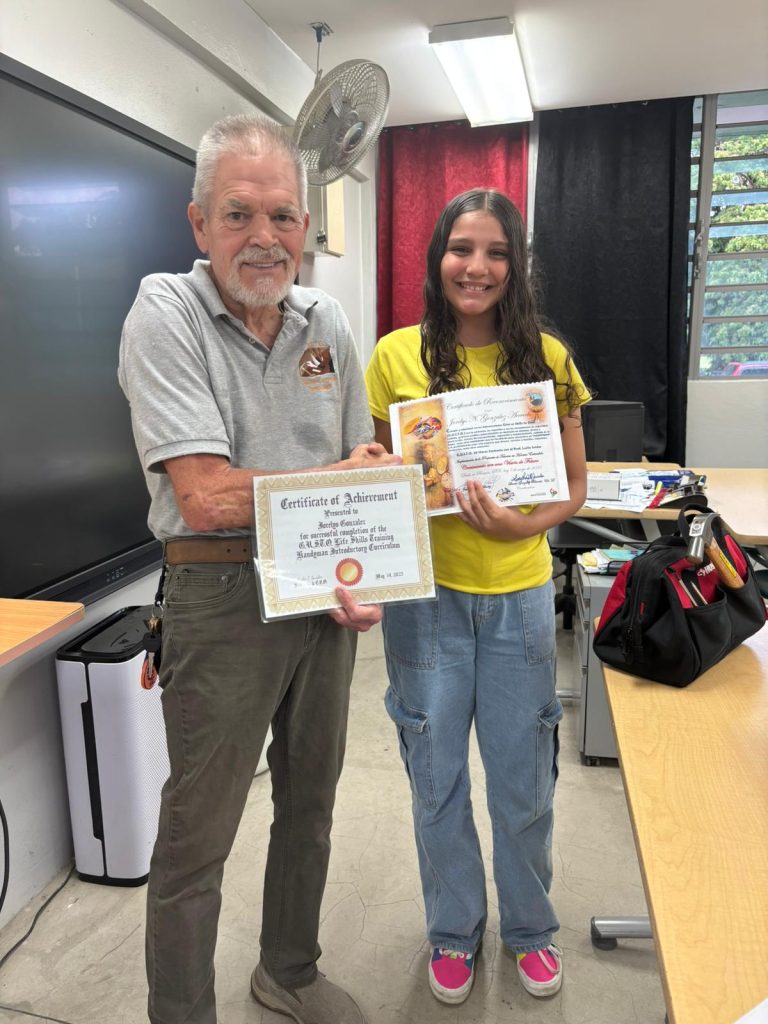
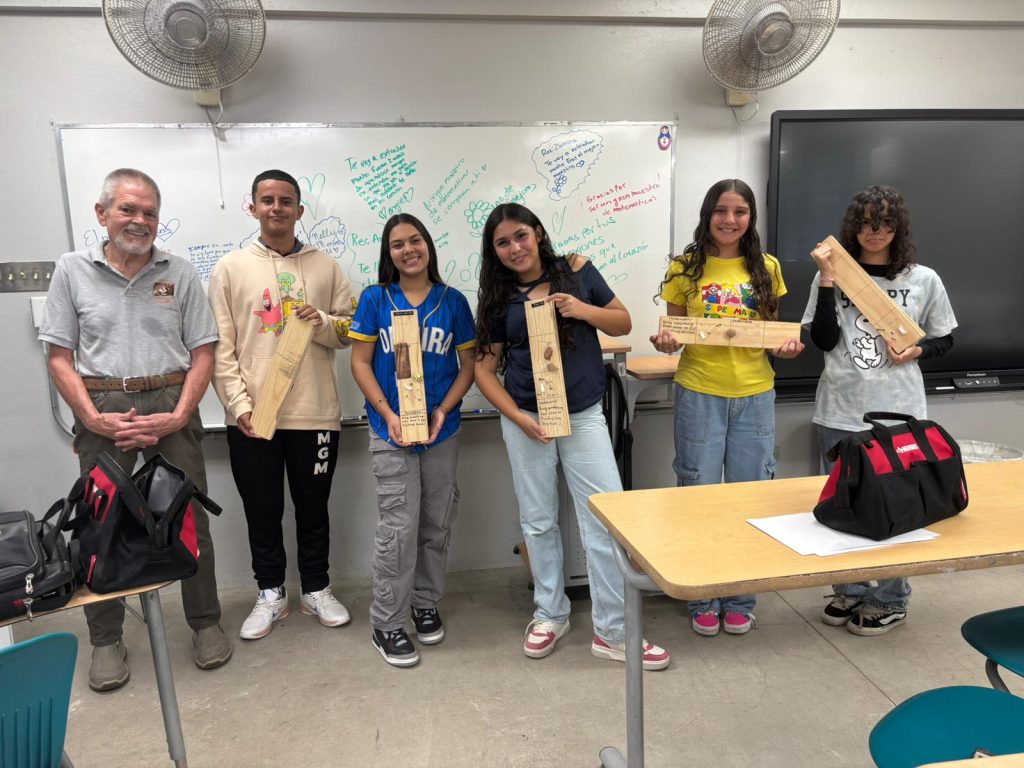
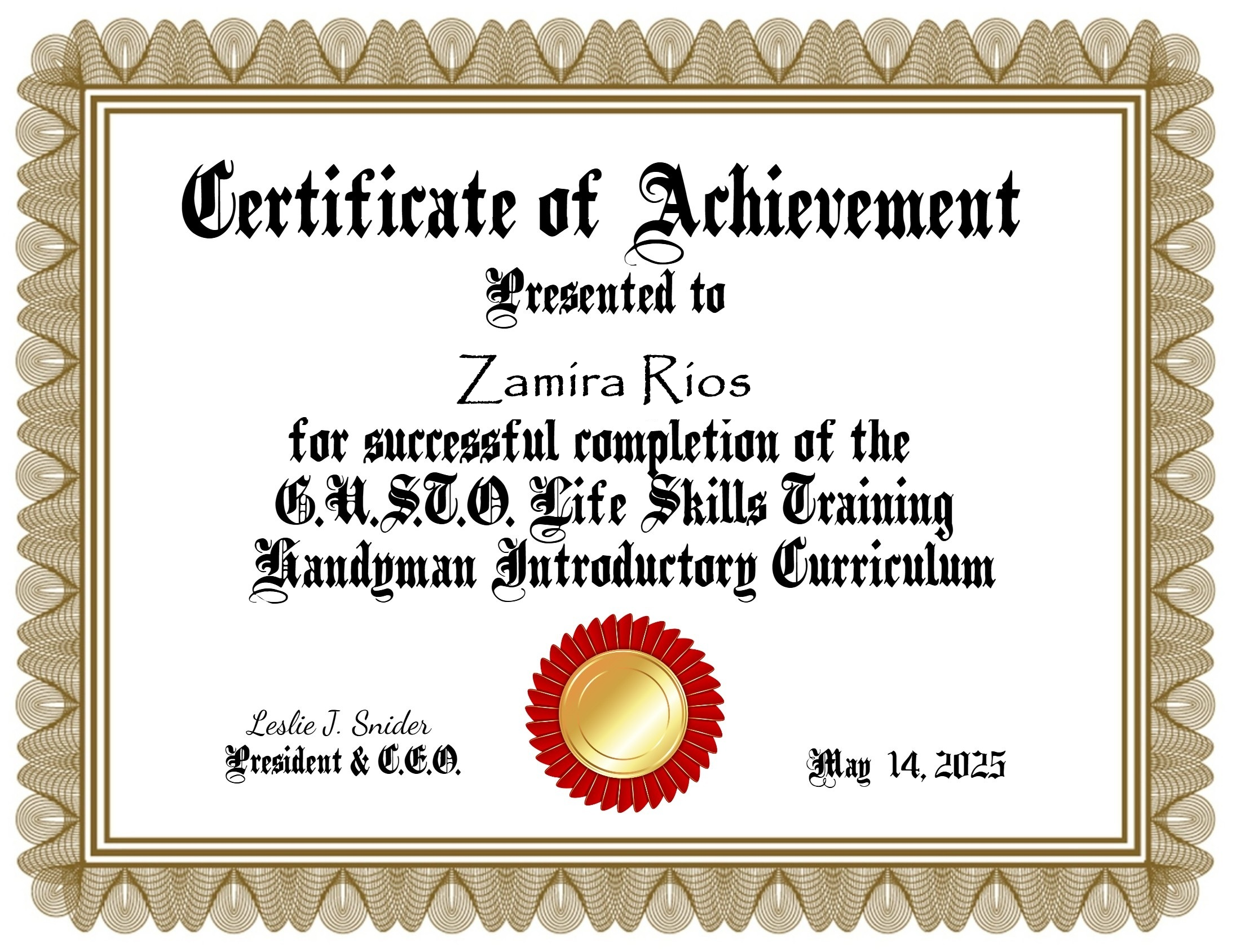
In the local example of a successful application of the Program in Manuel Gonzales Melo K-8, the class began with 21 students, and was completed by 9. Okay, we can’t control the numbers, we can only respond to the need and deliver the best instruction that we’re able to the kids we have. Students are moved to and from classes & subjects for just reasons by the parents/guardians and school administrators based on the comprehensive needs of those students. This doesn’t detract from our work in any way and we stay the course. The variations inherent in such a complex Program, with so many different skills, equipment, supplies, exposure time, locations, etc. make estimating case-specific, but when you’re talking about lives and futures, what’s it worth? The total cost of a semester with the resulting nine Certificates of Completion awarded, was $539, or $60/student, real numbers. The only cost omitted is the salary of the instructor (in this case the Founder) and that’s always approximately the local hourly compensation for teachers. That expenditure covered all the materials utilized by the students, and included their “graduation” tool bags, containing their First Aid kits, Safety gear, and all the tools they used in the Handyman course. Those went home with the students, and you can see the bright open smiles on the faces of the students who came into the room shy at the beginning, probably wondering “So what’s THIS all about?” At the end, they weren’t shy, they were pumped.